
Service Areas
Commercial Roofing
Harrisburg, PA
Harrisburg, PA
Commercial Roofing Contractors Lebanon, PA
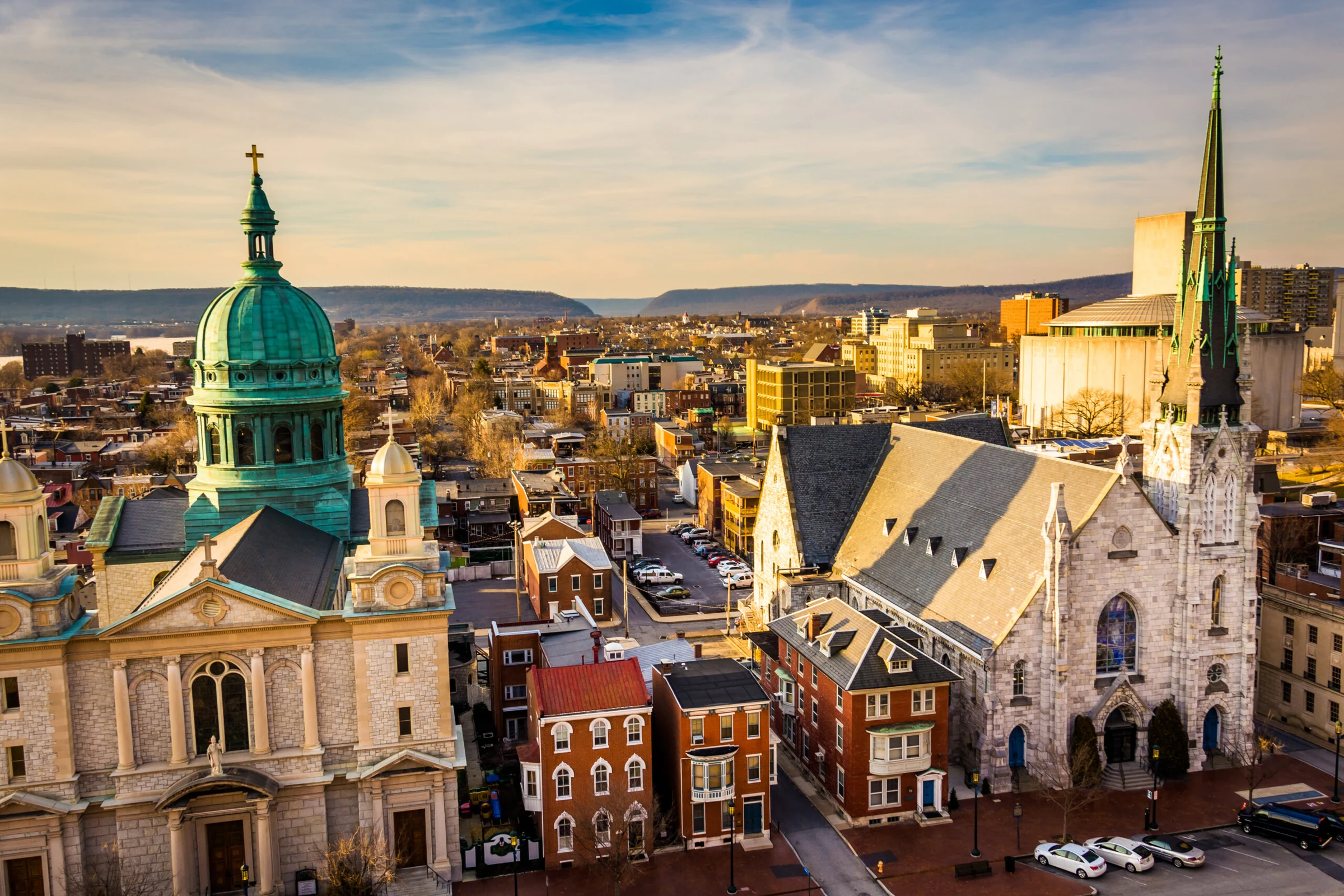
Commercial Roofers in Lebanon, PA
For commercial properties in Lebanon, PA, the defensible choice between repair, restoration, and replacement starts with roof-system condition, moisture findings, drainage performance, and remaining service life. Lebanon is a smaller, older industrial city, and the roof stock reflects a longer building history than the newer warehouse construction further west along the I-81 corridor. Food-processing plants, legacy manufacturing buildings, a hospital campus, and a compact downtown commercial district make up most of our work here, and a lot of it involves buildings that have been reroofed multiple times over several decades.
Food-Processing Plant Roofing
Lebanon's food-processing operations put specific demands on roof membrane chemistry, similar to what we see at manufacturing plants elsewhere in the region: sustained exposure to grease-laden exhaust, steam, and wash-down runoff that can degrade certain membrane seams faster than standard weathering would. We spec PVC or an exhaust-resistant coating system in the specific zones exposed to that byproduct stream, rather than running one uniform membrane across a plant that has meaningfully different exposure conditions section to section.
Scheduling around a working food-processing plant follows the same logic as our approach in Hershey and elsewhere in the corridor — hot work permits, fire watch coordination, and access windows set by the plant's production schedule and food-safety requirements, planned in advance rather than negotiated on the day of mobilization.
Legacy Manufacturing Buildings
Older manufacturing buildings in and around Lebanon often have roof decks and structural systems from an earlier construction era — heavier steel or wood deck construction that behaves differently under new membrane and insulation loading than a modern steel bar joist roof. Before quoting a full system, we verify structural capacity for the added dead load of a new insulation and membrane package, particularly on buildings where a prior owner may have already added roof-mounted equipment the original structure wasn't designed to carry.
Hospital Campus Roofing
The hospital campus in Lebanon carries the same critical-facility considerations we apply at any healthcare building in the market: prioritized leak response, coordination with facilities engineering before any tear-off, and attention to dust and noise control near patient-care areas. A compromised roof over mechanical or clinical space isn't a maintenance-queue item here — it moves to the top of our schedule.
Downtown Commercial Stock
Lebanon's downtown commercial buildings are smaller-footprint, often multi-story with a mix of retail on the ground floor and office or residential above, and many still carry older built-up or modified bitumen roofing installed decades ago. On these, we usually find layered roofing systems — several reroofs stacked on top of each other over the building's life — and part of our inspection process is confirming how many layers are actually up there before quoting a recover, since some jurisdictions and manufacturers limit how many layers a new system can go over.
- PVC and exhaust-resistant systems for food-processing exposure zones
- Structural dead-load verification on older manufacturing decks
- Priority scheduling for hospital campus leak response
- Layer-count verification on stacked downtown built-up roofs
- Hot-work permitting coordinated with plant production schedules
- Recover and restoration options for aging multi-story commercial buildings
Freeze-Thaw and Older Roof Assemblies
Older roof assemblies in Lebanon tend to show freeze-thaw stress differently than newer construction — cracked or alligatored bitumen, deteriorated flashing cement, and separated seams at penetrations that have been through decades of Pennsylvania winters. We check these specific failure points first on any older-building inspection, since that's where a small, cheap repair now can prevent a much larger emergency call during the next hard freeze.
Municipal and School Building Roofing
Lebanon's municipal buildings and school district facilities add another layer to the local roof stock, typically procured through a formal public-bid process with prevailing wage requirements and a defined specification an owner's representative or architect has already written. We bid these the way the process expects — against a fixed spec, with the manufacturer data sheets and pricing breakdown a school board or municipal authority needs for public review, rather than the more informal proposal format that works for a private commercial client.
Scheduling on school buildings follows the academic calendar the same way it does at Penn State Harrisburg further down the corridor — major tear-off and reroof work timed for summer break, with only emergency leak response happening during the school year.
Questions From Lebanon Building Owners
Why does a food-processing roof need a different membrane than a standard warehouse?
Grease and steam exhaust from processing equipment can degrade some membrane seam chemistries faster than normal weathering. We spec PVC or a resistant coating specifically in the exposed zones.
How many roofing layers can be on a building before you have to tear off?
It depends on code and the manufacturer's system requirements, but many jurisdictions cap it at two layers. We verify actual layer count during inspection before recommending recover versus tear-off.
Can an older building's structure actually support a new roof system?
Not always without checking. We verify dead-load capacity on older manufacturing decks before finalizing a system, especially where equipment has already been added over the years.
How fast do you respond to a leak at the hospital campus?
Hospital and critical-facility leaks get priority scheduling ahead of standard commercial calls, given the potential impact on clinical or mechanical spaces.
What's the most common issue you find on older downtown buildings?
Cracked or alligatored bitumen and deteriorated flashing cement at penetrations, usually the result of decades of freeze-thaw cycling without a full system replacement. On multi-story buildings we also check parapet cap flashing, since failures there send water into the wall assembly behind the roof deck, not only onto it.