
Roof Systems
Commercial Roofing
Harrisburg, PA
Harrisburg, PA
Spray Polyurethane Foam Roofing in Harrisburg, PA
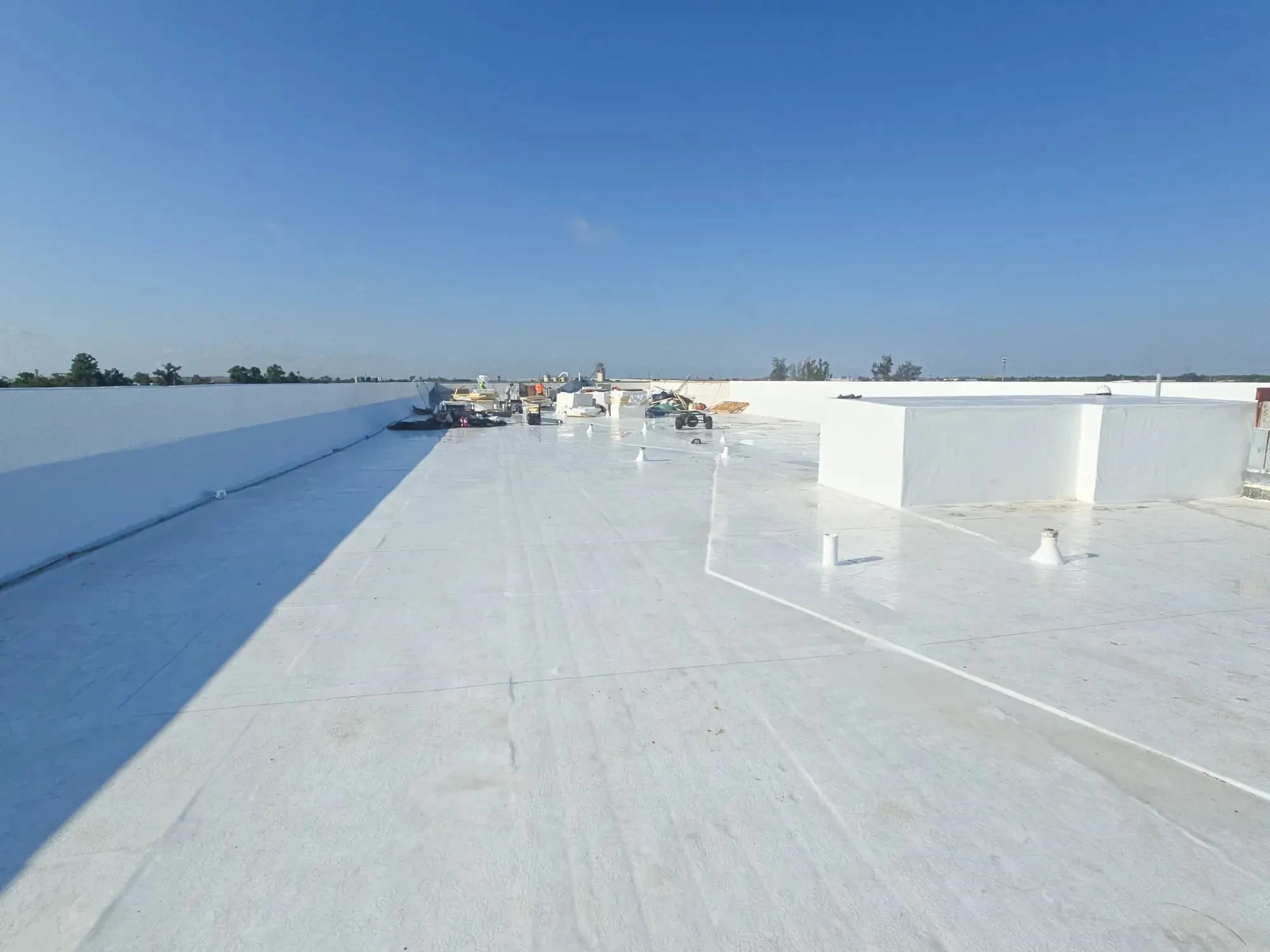
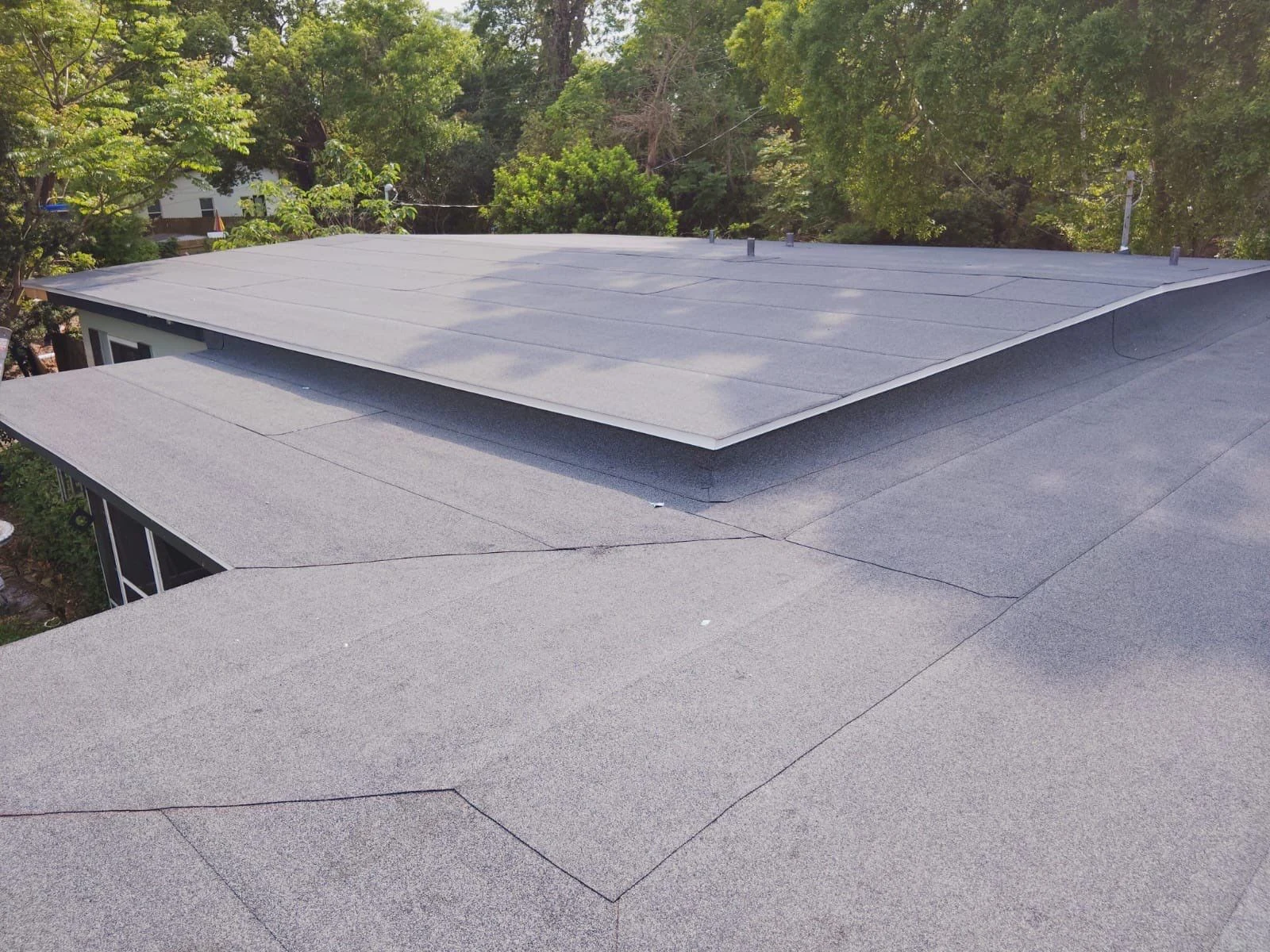
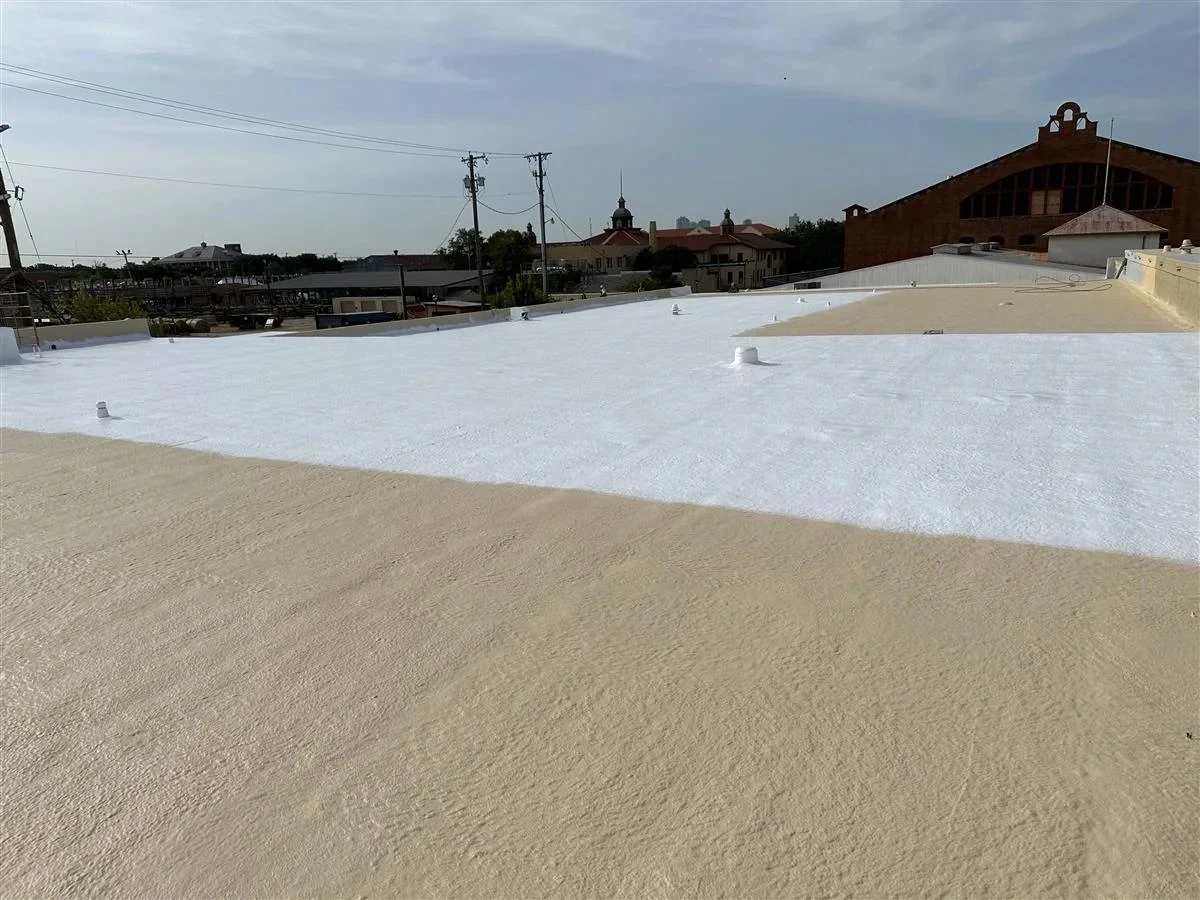
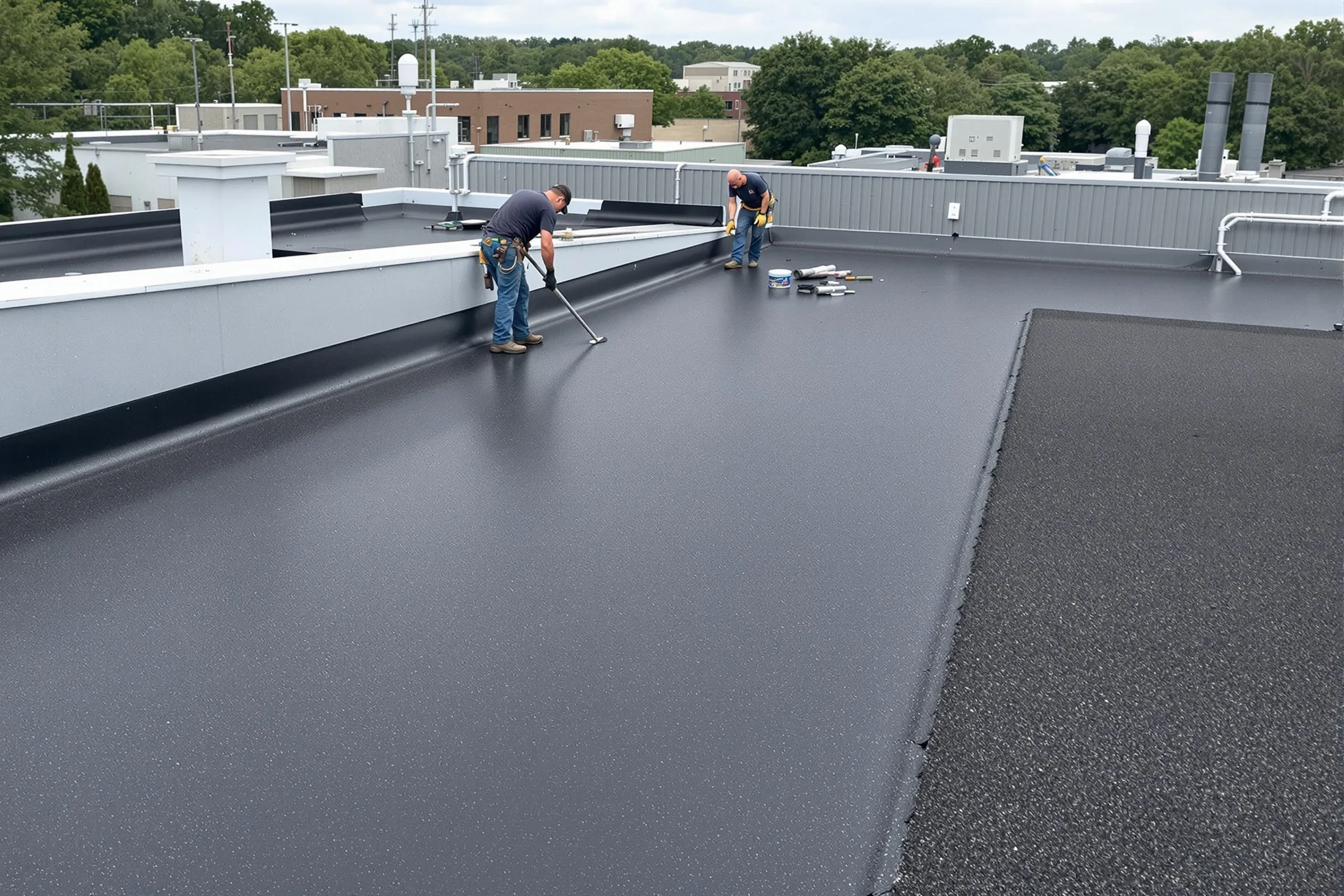
Spray Foam Roofing for Roofs With Heavy Penetrations
Spray polyurethane foam is a different category of roof system from membrane-based options: it's sprayed on as a liquid, expands into a monolithic, self-flashing surface, and adds real insulation value in the same application. It's a system we bring up specifically for roofs with dense penetration counts or existing structures that would be difficult to flash conventionally.
Monolithic, Self-Flashing Coverage on Roofs With Heavy Penetrations
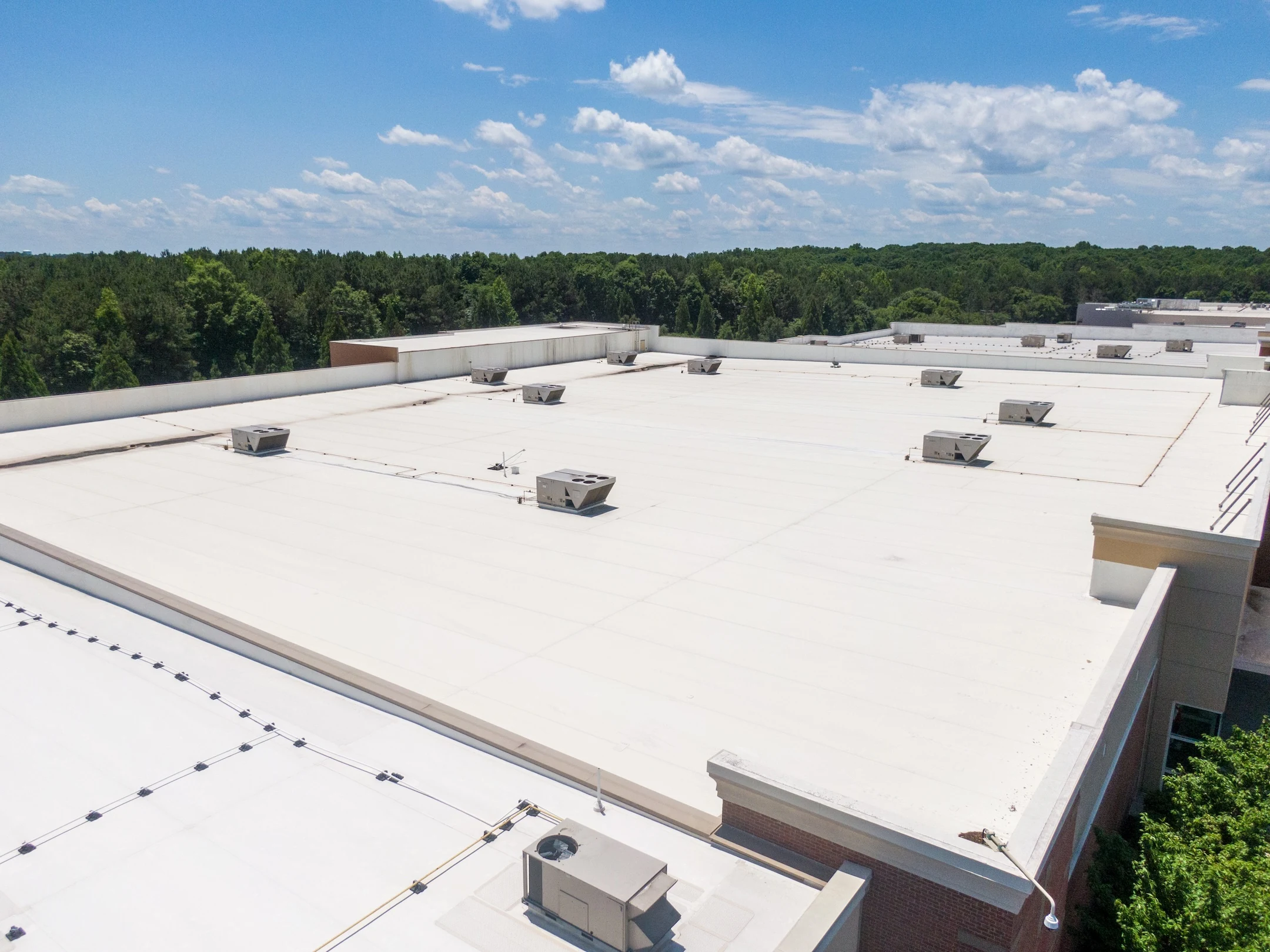
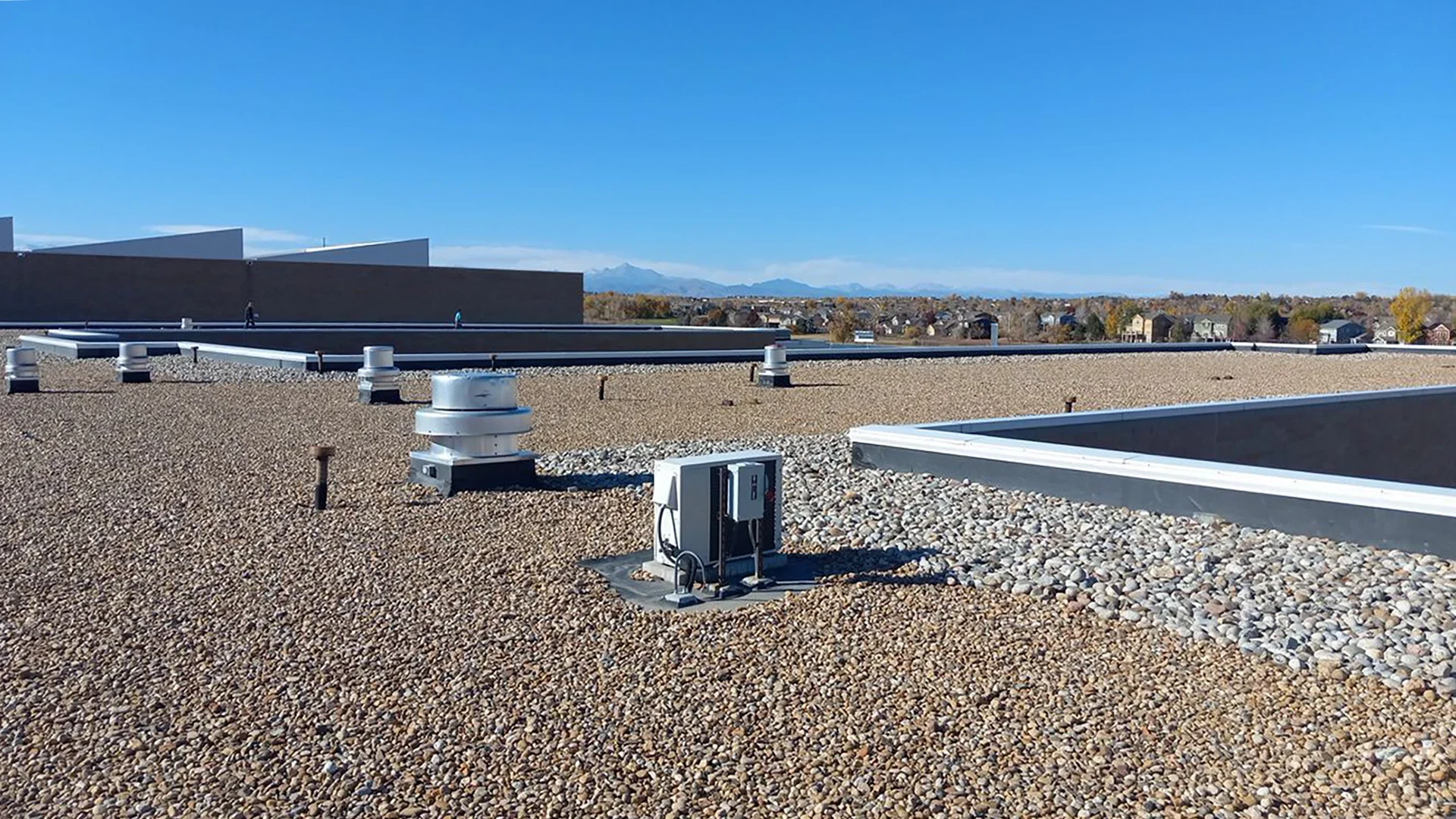
Distribution centers and government buildings in this market often carry dozens of rooftop penetrations: HVAC curbs, conduit runs, pipe supports, and equipment mounts, each of which needs individual flashing detail on a conventional membrane roof. Spray foam flows around and over these penetrations as it expands, creating a continuous, unbroken surface without the dozens of separate flashing details a membrane system requires.
That self-flashing property is the main reason we recommend foam on retrofit projects over older buildings where rooftop equipment has accumulated over decades, particularly government and institutional buildings that have added mechanical systems incrementally rather than through a single coordinated design.
State office buildings around the Capitol complex often fall into this category after decades of piecemeal HVAC and communications equipment additions, where documenting and individually flashing every penetration with a conventional membrane would be a far larger scope than the foam application itself.
Insulation Value and Central Pennsylvania Heating-Degree Days
Spray foam's closed-cell structure delivers meaningful R-value per inch, more than most conventional rigid insulation boards used under membrane roofs. In a climate with Central Pennsylvania's heating-degree-day count, that added insulation performance shows up directly in winter energy cost, which is a real consideration for owners of large, single-story buildings with a lot of roof area relative to wall area.
Foam thickness can also be varied across the roof during application to build in slope for drainage, which means the insulation and the drainage design happen in the same pass rather than as separate scopes.
That combined insulation-and-slope approach is particularly useful on an older flat roof that was never built with adequate drainage in the first place, since correcting slope with tapered rigid board after the fact is a separate and often more expensive scope than building it into a foam application.
We calculate expected heating and cooling savings against the current insulation condition before recommending foam over a membrane recover, since the insulation upgrade is a real part of the value proposition on an older, under-insulated building and worth quantifying rather than treating as a vague benefit.
Application Weather Windows: Temperature, Humidity, and Dew Point
Foam application is far more weather-sensitive than membrane installation. The chemical reaction that expands and cures the foam depends on substrate temperature, ambient humidity, and dew point margin, and installing outside those parameters produces foam with poor cell structure and weak adhesion. Our crews check conditions against manufacturer application windows before starting each day's work, rather than once at the start of a project:
- Substrate temperature within the manufacturer's specified range, checked directly rather than assumed from air temperature
- Relative humidity below the threshold that causes surface moisture on the substrate
- Dew point margin sufficient to avoid condensation during spray and cure
- Wind speed low enough to control overspray and maintain even application thickness
- No precipitation forecast during the cure window for that day's application
This is why foam projects in this region generally schedule around spring and fall, avoiding both peak summer humidity and winter cold, more tightly than membrane installation needs to.
Topcoat Selection and Recoat Maintenance
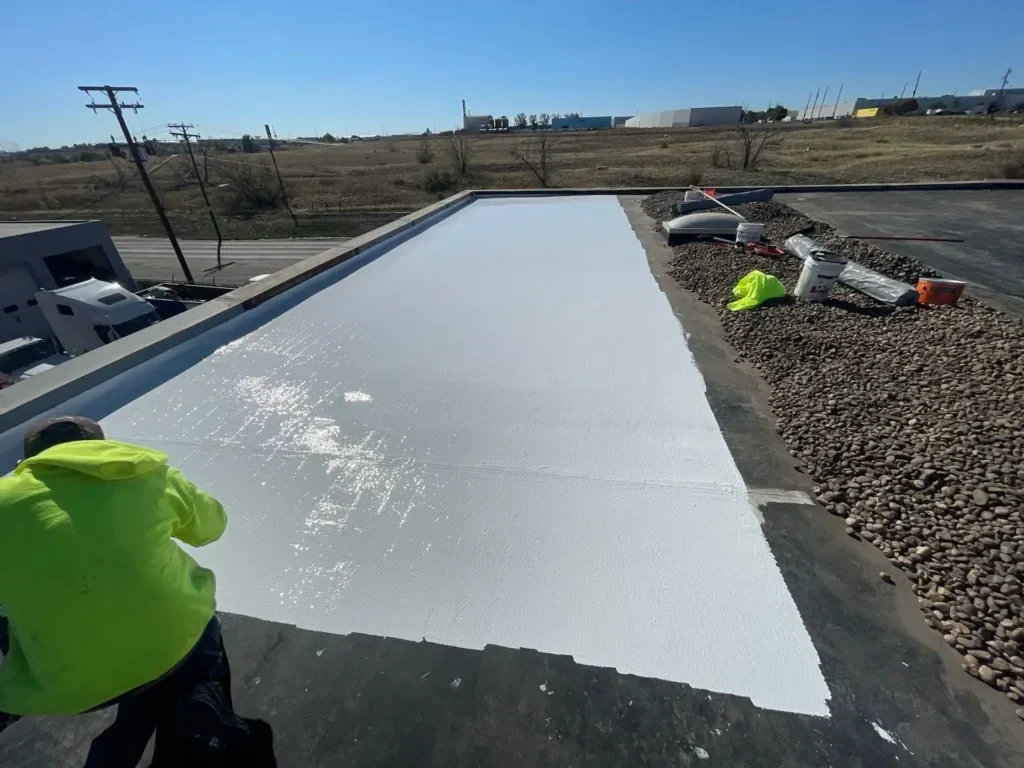
Foam itself degrades quickly under direct UV exposure, so every foam roof gets a protective topcoat, typically silicone or acrylic, applied immediately after the foam cures. That topcoat is what actually faces the weather over the roof's service life, and it needs periodic recoating on a cycle similar to a standalone coating system.
We build the recoat schedule into the maintenance plan for every foam roof we install, since a foam roof with a failed or thinning topcoat degrades faster than a bare membrane roof would in the same condition, given the foam's UV sensitivity underneath.
We inspect topcoat thickness with a wet-film gauge during application rather than relying on visual coverage alone, since an inconsistent topcoat thickness is the most common reason a foam roof's protective layer wears through unevenly ahead of its scheduled recoat.
Spray Foam Roofing: What We're Asked Most
Is spray foam roofing durable enough for a Pennsylvania winter?
Yes, with proper topcoat maintenance. The foam substrate itself performs well in cold climates; the topcoat is what needs periodic renewal to keep the system protected over decades of service.
Does spray foam work on a roof with an existing membrane still in place?
Often, yes, foam can be applied directly over a sound existing roof in many cases, which is part of its appeal for retrofit projects where tear-off would be disruptive or costly.
How does foam handle a roof with dense equipment and conduit runs?
This is foam's strongest use case. The self-flashing, monolithic nature of the system handles dense penetration counts more efficiently than conventional membrane flashing at each individual penetration.
What maintenance does a foam roof need over its life?
Periodic inspection and recoating of the protective topcoat, typically on a manufacturer-recommended cycle, along with prompt repair of any foam damage from foot traffic or dropped tools before it exposes the substrate.
Why can't foam be applied in the middle of winter?
The chemical reaction that cures foam requires substrate temperature, humidity, and dew point conditions that Central Pennsylvania winters typically don't provide consistently, which is why we schedule foam work for spring or fall application windows.